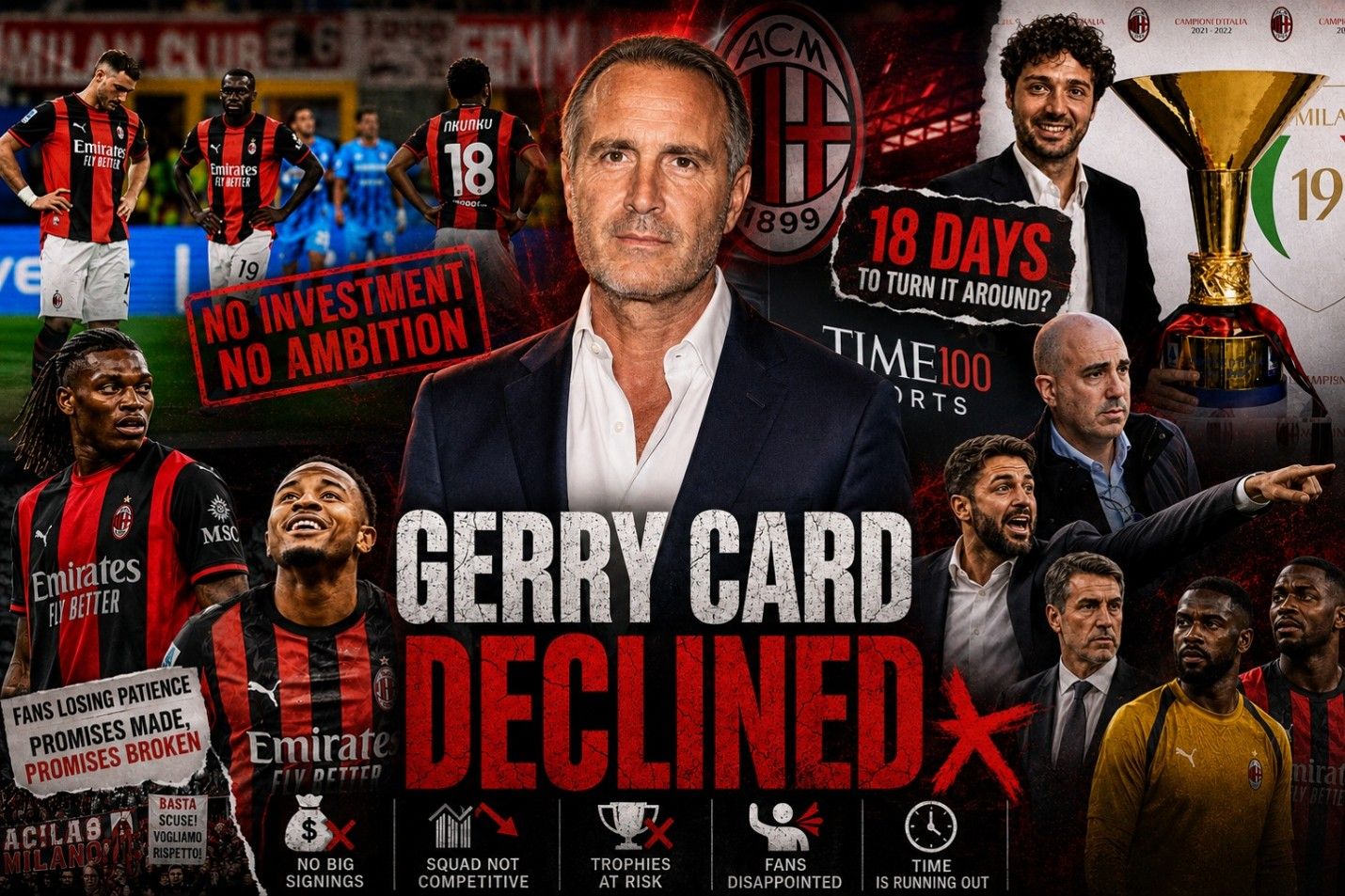
After a quick-fire transfer window start, AC Milan have all but blown up their mercato by their lack of conviction, a manager in the evaluation phase, and management in limbo.
For AC Milan, the summer transfer window has entered its most important phase. With the Serie A market scheduled to close on September 1 at 20:00 CET, the Rossoneri have roughly 18 days to complete the final pieces of the squad for Rúben Amorim’s first season in charge.
The Milan owner Gerry Cardinale has made it increasingly clear that he wants to be directly involved in the club’s sporting direction. Since Amorim’s arrival, Cardinale has been much more visible around Milanello, holding meetings with the Portuguese coach and the club’s sporting structure to discuss transfers and the construction of the squad.
The message is simple: Amorim has been brought to Milan to change the football, and Cardinale has to give him the tools to do it, and the early part of the mercato sent a strong signal as Milan reportedly invested more than €100 million in the first major phase of the summer, with Gonçalo Ramos arriving from Paris Saint-Germain and Mario Gila strengthening the defense. Those moves were designed with Amorim’s football in mind, particularly his preference for a 3-4-2-1 structure built around intensity, movement, and attacking quality.
But the job is not finished, and all parties have come together to ruin a good start to a mercato.
One of the biggest stories surrounding Milan this summer is not just the players coming in. It is the increased involvement of Cardinale himself.
The American owner has effectively taken a more hands-on role in the sporting project, as reports from Italy indicate that he has been involved in transfer meetings and has sought to align the club’s recruitment strategy with Amorim’s requirements. That matters a lot because Milan cannot afford another season of uncertainty.
The appointment of Amorim was supposed to represent a reset as the Portuguese coach arrived with a reputation for demanding aggressive, modern, and attacking football, with Milan presenting his appointment as the beginning of a new era.
A new coach, however, cannot build a new football philosophy with an incomplete squad. Amorim needs players who can understand his positional demands, defend aggressively, progress the ball under pressure, and attack space quickly. His system places particular demands on the wing-back positions, the central midfield, and the two attacking players operating behind the striker.
That means the remaining business cannot simply be about signing famous names. It has to be about players who fit into the high energy and pressing system.
Gonçalo Ramos represents one of the clearest statements Milan have made this summer as the Portuguese striker gives Amorim a forward who understands the demands of high-intensity football and can operate as the focal point of an aggressive attacking system. His arrival also makes sense from a tactical perspective: Amorim needs a striker capable of pressing, linking play, and attacking the penalty area, but the former PSG man alone does not transform Milan, as a striker is only as effective as the service he receives.
If Milan wants Ramos to become the centerpiece of Amorim’s attack, they need sleek creativity behind him, players capable of receiving between the lines, progressing possession, and creating one-on-one situations.
The Turning Point
Outgoings, evaluation and Indecision. Rafael Leão remains one of the biggest questions surrounding the squad with reports suggesting that Milan are prepared to consider his departure if the right offer arrives, while his suitability to Amorim’s system has also generated discussion.
Having spent seven years in Milan, selling Leão would obviously create a major sporting hole, but it could also provide Milan with enormous financial flexibility to act fast and replace him. The danger, however, is waiting too long, as if Leão leaves near the end of the window, Milan would have limited time to find a replacement and integrate that player into Amorim’s system. That is why the next two weeks require decisiveness.
Cardinale cannot allow Milan to enter September with a major hole that everybody knew existed in August.
Another major responsibility is finding a balance in the center. Amorim's football requires energy, technical ability, and tactical discipline. Milan needs midfielders who can resist pressure, move the ball quickly, and cover large spaces when the team attacks. The presence of Luka Modrić provides experience and extraordinary technical quality, but a 41-year-old midfielder cannot be expected to carry an entire midfield for an entire season.
Milan, therefore, needs younger legs around him, and the objective is to create a midfield capable of supporting Amorim's tactical demands for 90 minutes.
The next 18 days are about decisions that could change Milan’s season for good or for worse, and this is the part of the mercato where patience can become a weakness.
Milan has already spent 100 million. The objective now should be precision rather than panic, and Cardinale, Amorim, Henrik Almstadt, Bobby Gardiner, and the recruitment team need to answer four questions. Who must arrive? Who must leave? Which positions require immediate reinforcement? Which players genuinely fit Amorim's football and bring instant impact?
Every transfer should answer one of those questions, and the worst outcome would be signing players simply because an opportunity appears in the market, as AC Milan needs a squad designed for a specific football identity. Players who don’t fit his system, like Estupiñán, Nkunku, Tomori, Fofana, and co., should also be sold quickly, as the market doesn’t wait for the sell-to-replace model that Milan is relying on to make moves late in the market. Rafael Leao has also been rumored to leave the club, according to news yesterday, which has sparked commentary from neutrals, fans, and foes alike on how one sale may spark immediate improvement or replacement across the board for the Rossoneri.
That is what makes these final 18 days so important. Cardinale must back the project, and he has placed himself at the center of Milan’s new era, which means the responsibility is no longer something that can simply be passed from one executive to another.
If Amorim succeeds, Cardinale will receive credit for giving him the platform, and if Amorim struggles because the squad is incomplete, questions will inevitably return to the ownership and recruitment strategy. The early signs in the mercato may have been encouraging, as Milan already made substantial investments and have clearly attempted to build around their new coach, but football is not played on spreadsheets. It is played with players, and Amorim now needs the right ones fast. With the transfer window closing on September 1, Milan have approximately 18 days to finish the job of clearing unwanted players and getting good functional ones for the team.
Gonçalo Ramos is here. Mario Gila is here; now comes the hardest part, finishing building the squad by giving Amorim the weapons and then letting the football results speak for themselves because after all the changes at Milan, the supporters are no longer interested in hearing about the project after four years of failure and underachievement compared to their rivals across the blue and black side.
The final weeks of the transfer window could ultimately decide whether Milan steps into the new season as true contenders or merely as a side still piecing itself back together. Milan management must be willing to commit resources wisely or risk seeing his stake in one of Europe’s most storied clubs slide into instability and financial as well as sporting setbacks.
Over to you, Gerry.
Comments
Join the conversation
Pick your avatar
We'll email you only if someone replies. Your address is never shown.
Loading comments…