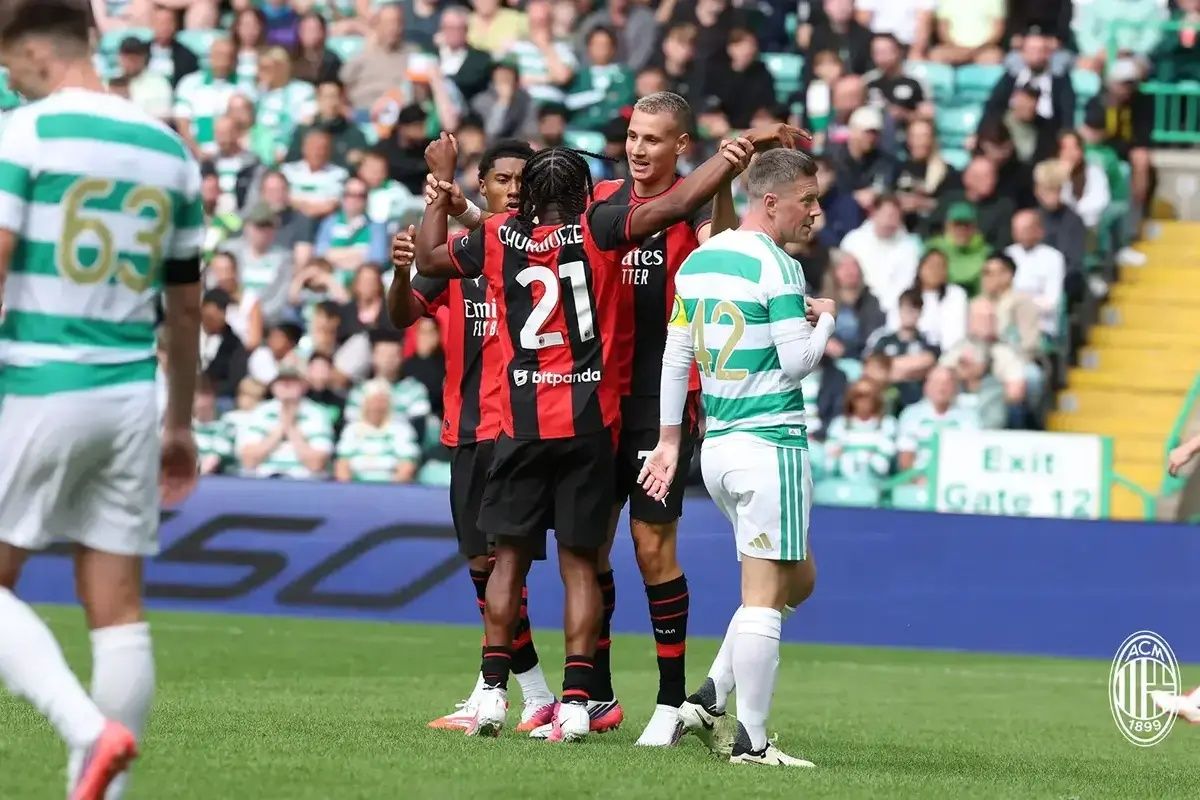
The curtain has officially opened on AC Milan’s 2026/27 preseason campaign, and it began in dramatic fashion with a pulsating 2-2 draw against Celtic at Celtic Park. The friendly fixture, though technically inconsequential in terms of results, provided a fascinating glimpse into the challenges and opportunities that lie ahead for Ruben Amorim in his first outing as Milan’s new head coach. What unfolded was the quintessential game of two halves: a first period dominated by Celtic’s sharpness and Milan’s defensive frailties, followed by a second half that showcased the resilience, energy, and attacking promise of a youthful Rossoneri side.
First Half: Celtic Exploit Milan’s Defensive Disarray
From the opening whistle, Celtic looked sharper, hungrier, and more cohesive. Milan’s back line appeared disorganized, with gaps opening across both flanks and central areas. The Scottish champions pressed aggressively, forcing Milan into errors and capitalizing on their lack of rhythm. New signing Camilo Duran wasted little time in announcing himself to the Celtic faithful, breaking the deadlock with a composed finish after Milan’s defense failed to clear their lines.
If that wasn’t enough, Duran turned provider soon after, setting up veteran winger James Forrest, who doubled Celtic’s advantage with a clinical strike. By halftime, Celtic were firmly in control, and Milan looked rattled. The Rossoneri struggled to build through midfield, their passing was sloppy, and their defensive positioning left much to be desired. Amorim’s men trudged into the dressing room two goals down, visibly disoriented and in need of inspiration.
Second Half: Amorim’s Changes Spark a Comeback
Whatever Amorim said during the interval clearly struck a chord. The Portuguese coach made eight substitutions at halftime, injecting fresh legs and youthful energy into the side. The transformation was immediate. Milan suddenly looked like a completely different team, more aggressive in the press, sharper in possession, and brimming with attacking intent.
At the heart of the revival was 18-year-old Francesco Camarda, a prodigious talent already touted as one of Italy’s brightest prospects. Just moments after the restart, Camarda calmly converted a penalty to halve the deficit. Barely minutes later, he rose highest in the box to head home the equalizer, completing a stunning quick-fire brace that rescued Milan from defeat. His composure, movement, and killer instinct belied his age, and his performance became the defining story of the evening.
The Rossoneri continued to press forward, with Samuel Chukwueze adding pace and directness on the wing, while academy graduate Christian Comotto helped stabilize the midfield. Though Milan couldn’t find a winning goal, their second-half display was enough to leave fans encouraged about the team’s direction under Amorim.
Lessons Learned: Warning Signs and Encouragement
Preseason matches are rarely judged by results, but performances often reveal deeper truths. For Milan, the first half was a stark reminder of the work Amorim must undertake to solidify the team defensively. The back line looked shaky, with poor positioning and slow reactions gifting Celtic two goals. The midfield struggled to link play, and the team was punished whenever Celtic pressed high.
Yet the second half offered genuine encouragement. Milan’s pressing improved, their attacking play carried greater purpose, and the youngsters seized their opportunity to shine. The resilience shown in clawing back from a two-goal deficit reflected character and determination, qualities that will serve them well in the season ahead.
Most importantly, Camarda’s brace reaffirmed his status as a generational talent. Amorim’s post-match comments suggested the teenager would not be sent out on loan, hinting that he could serve as backup to Gonçalo Ramos in the first-team squad. For supporters, that was music to their ears.
Youngsters Making Their Mark
Beyond Camarda, several other young players impressed. Guernier, Cissé, Comotto, Odogu, and Ossola all made impactful debuts, showcasing sleek passing, free-flowing football, and a willingness to express themselves. Their contributions were vital in helping Milan fight back for the draw, and their performances hinted at a bright future for the club’s academy graduates.
Defensively, while the team improved after halftime, the first-half lapses cannot be ignored. Celtic repeatedly exploited Milan’s flanks, finding joy down both the left and right sides. Only after Amorim’s adjustments did Milan stabilize, preventing Celtic from adding a third goal.
Top Performers
Francesco Camarda was the undisputed star of the match. His two goals in seven minutes completely transformed the contest, and his overall presence made him Milan’s most dangerous forward. Calm under pressure, intelligent in movement, and ruthless in execution, Camarda’s performance was a statement.
Samuel Chukwueze injected pace and directness, constantly driving at defenders and stretching Celtic’s back line. His willingness to attack one-on-one created momentum and kept Celtic on edge throughout the second half.
Christian Comotto played with maturity beyond his years. His intelligent passing and composure helped Milan regain control in midfield, making his debut a highly encouraging one.
Flops
Milan’s first-half defense was poor. Positioning was suspect, reactions were slow, and distribution was careless. Celtic punished them ruthlessly, and Amorim will need to address these issues urgently. Match rustiness may explain some of the lapses, but concentration and pace at the back must improve significantly.
Final Thoughts
The scoreline ultimately reflected the balance of play: Celtic were comfortably the better side before halftime, while Milan dominated after the break. For Ruben Amorim, the match provided both warning signs and reasons for optimism. The defensive organization requires significant improvement, but the emergence of Camarda and the impact of Milan’s young players offer hope.
A draw in preseason will not define Milan’s campaign, but the character shown in mounting a two-goal comeback sets a positive tone for the weeks ahead. Supporters can take heart from the resilience, energy, and attacking flair displayed in the second half. If Amorim can tighten the defense and harness the potential of his young talents, along with getting the right profiles in a busy transfer window that has thirty-five days to go, Milan’s 2026/27 season could be one of excitement and promise.
Comments
Join the conversation
Pick your avatar
We'll email you only if someone replies. Your address is never shown.
Loading comments…