
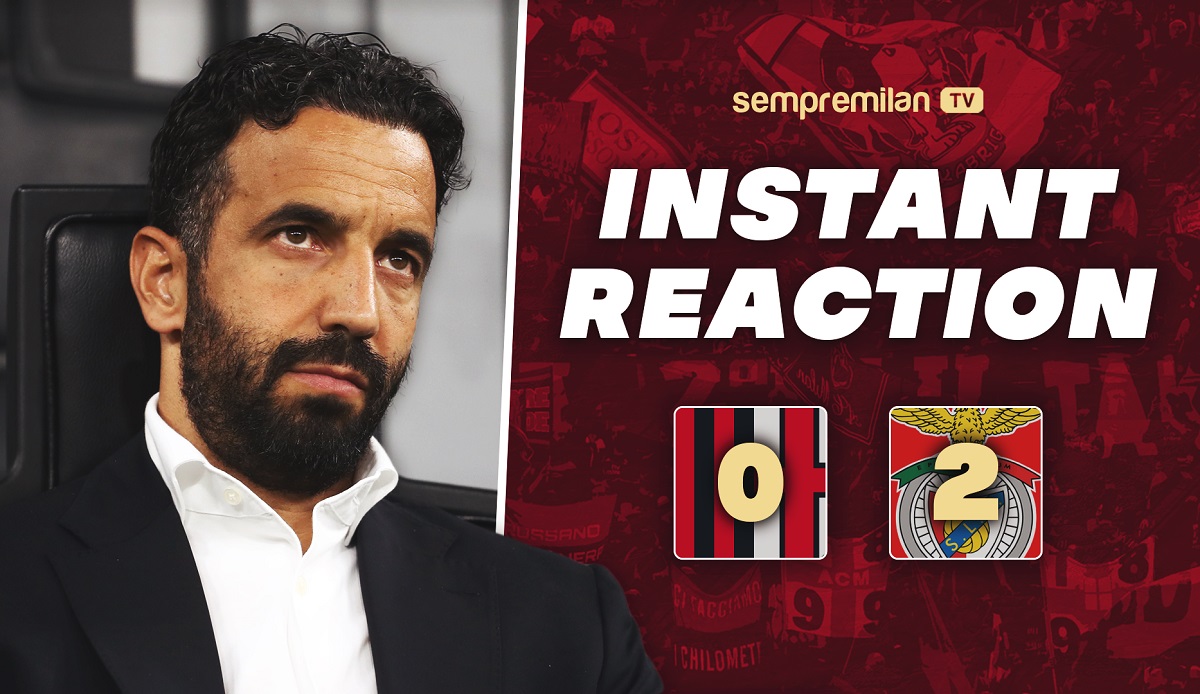
The internal knockout right away against Benfica in the Europa League triggered the first strong controversies around the management of Ruben Amorim, who ended up in the line of criticism from fans for performances and some tactical choices. Defending the Portuguese coach was taken up by journalist Maurizio Pistocchi, who through a post published on his X profile invited the entire Rossoneri environment to stay calm and give the team the necessary time to absorb the new ideas of play. The journalist wanted to contextualise Milan's moment by comparing the Rossoneri's path with that of the current leaders of the Italian championship.
To support his thesis, Pistocchi highlighted how successes and tactical continuity require programming and work over time, elements that currently favour the direct rivals. "Gasperini and Chivu, first in the standings, are in their second season as coaches of Roma and Inter. Fabregas, second, has been at Como since 2022. Anyone who has watched football for a few years knows that winning at the first attempt is an exception, not the rule, and often those who win do so thanks to the work of those who preceded them," the journalist explained, emphasizing that patience is the fundamental key to building a long‑term winning project.
Historical comparison with Sacchi and the recipe to get out of difficult moments
Continuing his social analysis, Pistocchi then brought up a famous historical precedent linked to the Rossoneri world, recalling the early days of Arrigo Sacchi’s era on the Devil’s bench to show how rushed judgments at the start of a season can turn out completely wrong. A call to the past to invite everyone not to panic after the first false steps and to support the technical guidance.
"In short, calm and plaster: when in 1987 Sacchi’s Milan was eliminated by Espanyol, Italian journalists were demanding his dismissal: Berlusconi went into the locker room and told the team ‘Sacchi is Milan’s coach, I chose him and he will stay next year as well. Those who remain will be those who follow him.’ Everyone knows how it ended: we are only mid‑September and it takes time," Pistocchi concluded, reminding that definitive judgments are not made at the beginning of autumn and that Amorim deserves trust to demonstrate the value of his work.




Comments
Join the conversation
Pick your avatar
We'll email you only if someone replies. Your address is never shown.
Loading comments…